-
-
-
Jakarta, Indonesia
Understanding Stunted Children: Chronic Growth Failure, Early-Life Risks, and Why It Matters Beyond Height

When Is the Right Time to Get a Health Checkup?
-
 Post By
 -
Published
April 29, 2026
When people think about a health checkup, they often imagine a visit that should happen only after symptoms begin. In reality, one of the most important purposes of a proper health checkup is to identify disease before it becomes clinically obvious. Many chronic conditions develop quietly over time. Hypertension may remain undetected until it contributes to stroke or kidney disease. Colorectal cancer may progress silently before producing warning signs. Cervical and breast cancer may also enter a more advanced stage before a patient recognizes symptoms. For that reason, the right time to seek a health checkup is often before a person feels ill, especially when screening is recommended by age and risk profile.
This preventive approach is strongly supported by public health evidence. According to the World Health Organization, noncommunicable diseases caused at least 43 million deaths in 2021 and accounted for 75 percent of non-pandemic-related deaths globally. Cardiovascular diseases, cancers, chronic respiratory diseases, and diabetes remain the major contributors to this burden. The same WHO fact sheet emphasizes that detection, screening, and treatment are central components of the response to these diseases. This means that timely checkups are not merely optional habits of healthy living; they are part of a clinically meaningful strategy to reduce preventable morbidity and premature mortality.
The correct timing of a health checkup, however, is not identical for every individual. It depends on age, biological sex, family history, known comorbidities, lifestyle exposures, body weight, pregnancy status, prior abnormal test results, and the presence or absence of warning symptoms. In other words, a useful checkup is not defined by doing every possible test. It is defined by matching the right preventive evaluation to the right person at the right time.
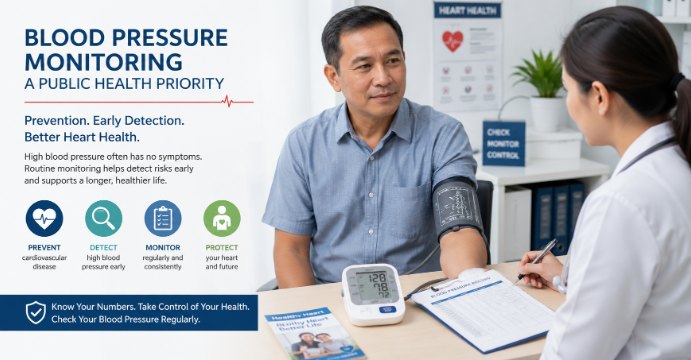
One of the clearest and most broadly relevant examples is blood pressure screening. The U.S. Preventive Services Task Force recommends screening for hypertension in adults aged 18 years or older. Importantly, the recommendation does not treat all adults identically. Adults aged 40 years or older and those at increased risk should generally be screened every year, while adults aged 18 to 39 years with prior normal readings and no major risk factors may be screened less frequently, such as every three to five years. This distinction reflects a core principle of evidence-based prevention: timing should follow risk. Hypertension deserves special attention because it is frequently asymptomatic, yet it remains one of the most important contributors to cardiovascular disease, stroke, and kidney injury.
Cancer screening provides another strong example of why the timing of a checkup matters. The U.S. Preventive Services Task Force recommends colorectal cancer screening for average-risk adults beginning at age 45. This is clinically important because colorectal cancer may develop gradually from precancerous lesions over several years, and earlier screening increases the opportunity to detect disease or advanced polyps before complications occur. For women, breast cancer screening is also time-sensitive. The Task Force now recommends mammography every other year starting at age 40 through age 74. This recommendation reflects updated evidence showing that earlier routine screening in this age group can help reduce mortality from breast cancer.
Cervical cancer screening also illustrates how preventive checkups must be adjusted by age and testing modality. Women aged 21 to 29 years are recommended to undergo screening every three years with cervical cytology alone. For women aged 30 to 65 years, recommended options include cytology alone every three years, high-risk human papillomavirus testing alone every five years, or cotesting every five years. These intervals are not arbitrary. They are designed to preserve the benefit of early detection while avoiding unnecessary overtesting and excess intervention.
At the same time, the right time for a health checkup is not limited to age-based screening schedules. Clinical timing must also respond to changes in risk. A person who develops obesity, begins smoking, gains central weight rapidly, has a strong family history of early cardiovascular disease or cancer, experiences chronic fatigue, develops bowel habit changes, notices rectal bleeding, or has abnormal vaginal bleeding should not wait passively for a routine annual visit. These situations justify earlier medical evaluation because they may represent either elevated risk or active disease. Similarly, individuals living with diabetes, dyslipidemia, chronic hypertension, or prior abnormal screening results generally require more structured follow-up than healthy low-risk adults.
A common misconception is that a “good” checkup always means an annual full laboratory package for everyone. While annual follow-up may be appropriate for older adults, patients with chronic disease, or individuals with multiple risk factors, routine prevention in younger healthy adults may be better guided by targeted screening intervals rather than broad repetitive testing without indication. High-value preventive care means using evidence-based screening with clinical judgment, not simply increasing the volume of tests. This distinction is important because unnecessary screening may increase cost, create anxiety, and lead to follow-up procedures that do not always improve outcomes.
It is equally important to distinguish a preventive health checkup from a symptom-driven clinical consultation. Preventive screening is designed for individuals who do not yet have obvious disease, whereas diagnostic evaluation is needed when symptoms are already present. Chest pain, unexplained weight loss, persistent cough, severe headache, neurological deficits, breast lumps, rectal bleeding, or prolonged fever should never be deferred as if they were routine checkup issues. Such findings require direct and timely medical assessment.
In practical terms, the best time to get a health checkup is before silent disease progresses, at the age when proven screening becomes beneficial, and immediately when new symptoms or major risk factors appear. The most useful checkup is therefore not defined by frequency alone, but by relevance, timing, and the quality of clinical decision-making. For patients, the safest and most effective approach is to discuss individualized screening needs with a qualified healthcare professional, so that prevention can be aligned with actual risk rather than guesswork.
References
1. World Health Organization. Noncommunicable diseases. Available at: https://www.who.int/news-room/fact-sheets/detail/noncommunicable-diseases
2. US Preventive Services Task Force. Hypertension in Adults: Screening. 2021. Available at: https://www.uspreventiveservicestaskforce.org/uspstf/recommendation/hypertension-in-adults-screening
3. US Preventive Services Task Force. Colorectal Cancer: Screening. 2021. Available at: https://www.uspreventiveservicestaskforce.org/uspstf/recommendation/colorectal-cancer-screening
4. US Preventive Services Task Force. Breast Cancer: Screening. 2024. Available at: https://www.uspreventiveservicestaskforce.org/uspstf/recommendation/breast-cancer-screening
5. US Preventive Services Task Force. Cervical Cancer: Screening. 2018. Available at: https://www.uspreventiveservicestaskforce.org/uspstf/recommendation/cervical-cancer-screening
This preventive approach is strongly supported by public health evidence. According to the World Health Organization, noncommunicable diseases caused at least 43 million deaths in 2021 and accounted for 75 percent of non-pandemic-related deaths globally. Cardiovascular diseases, cancers, chronic respiratory diseases, and diabetes remain the major contributors to this burden. The same WHO fact sheet emphasizes that detection, screening, and treatment are central components of the response to these diseases. This means that timely checkups are not merely optional habits of healthy living; they are part of a clinically meaningful strategy to reduce preventable morbidity and premature mortality.
The correct timing of a health checkup, however, is not identical for every individual. It depends on age, biological sex, family history, known comorbidities, lifestyle exposures, body weight, pregnancy status, prior abnormal test results, and the presence or absence of warning symptoms. In other words, a useful checkup is not defined by doing every possible test. It is defined by matching the right preventive evaluation to the right person at the right time.
One of the clearest and most broadly relevant examples is blood pressure screening. The U.S. Preventive Services Task Force recommends screening for hypertension in adults aged 18 years or older. Importantly, the recommendation does not treat all adults identically. Adults aged 40 years or older and those at increased risk should generally be screened every year, while adults aged 18 to 39 years with prior normal readings and no major risk factors may be screened less frequently, such as every three to five years. This distinction reflects a core principle of evidence-based prevention: timing should follow risk. Hypertension deserves special attention because it is frequently asymptomatic, yet it remains one of the most important contributors to cardiovascular disease, stroke, and kidney injury.
Cancer screening provides another strong example of why the timing of a checkup matters. The U.S. Preventive Services Task Force recommends colorectal cancer screening for average-risk adults beginning at age 45. This is clinically important because colorectal cancer may develop gradually from precancerous lesions over several years, and earlier screening increases the opportunity to detect disease or advanced polyps before complications occur. For women, breast cancer screening is also time-sensitive. The Task Force now recommends mammography every other year starting at age 40 through age 74. This recommendation reflects updated evidence showing that earlier routine screening in this age group can help reduce mortality from breast cancer.
Cervical cancer screening also illustrates how preventive checkups must be adjusted by age and testing modality. Women aged 21 to 29 years are recommended to undergo screening every three years with cervical cytology alone. For women aged 30 to 65 years, recommended options include cytology alone every three years, high-risk human papillomavirus testing alone every five years, or cotesting every five years. These intervals are not arbitrary. They are designed to preserve the benefit of early detection while avoiding unnecessary overtesting and excess intervention.
At the same time, the right time for a health checkup is not limited to age-based screening schedules. Clinical timing must also respond to changes in risk. A person who develops obesity, begins smoking, gains central weight rapidly, has a strong family history of early cardiovascular disease or cancer, experiences chronic fatigue, develops bowel habit changes, notices rectal bleeding, or has abnormal vaginal bleeding should not wait passively for a routine annual visit. These situations justify earlier medical evaluation because they may represent either elevated risk or active disease. Similarly, individuals living with diabetes, dyslipidemia, chronic hypertension, or prior abnormal screening results generally require more structured follow-up than healthy low-risk adults.
A common misconception is that a “good” checkup always means an annual full laboratory package for everyone. While annual follow-up may be appropriate for older adults, patients with chronic disease, or individuals with multiple risk factors, routine prevention in younger healthy adults may be better guided by targeted screening intervals rather than broad repetitive testing without indication. High-value preventive care means using evidence-based screening with clinical judgment, not simply increasing the volume of tests. This distinction is important because unnecessary screening may increase cost, create anxiety, and lead to follow-up procedures that do not always improve outcomes.
It is equally important to distinguish a preventive health checkup from a symptom-driven clinical consultation. Preventive screening is designed for individuals who do not yet have obvious disease, whereas diagnostic evaluation is needed when symptoms are already present. Chest pain, unexplained weight loss, persistent cough, severe headache, neurological deficits, breast lumps, rectal bleeding, or prolonged fever should never be deferred as if they were routine checkup issues. Such findings require direct and timely medical assessment.
In practical terms, the best time to get a health checkup is before silent disease progresses, at the age when proven screening becomes beneficial, and immediately when new symptoms or major risk factors appear. The most useful checkup is therefore not defined by frequency alone, but by relevance, timing, and the quality of clinical decision-making. For patients, the safest and most effective approach is to discuss individualized screening needs with a qualified healthcare professional, so that prevention can be aligned with actual risk rather than guesswork.
References
1. World Health Organization. Noncommunicable diseases. Available at: https://www.who.int/news-room/fact-sheets/detail/noncommunicable-diseases
2. US Preventive Services Task Force. Hypertension in Adults: Screening. 2021. Available at: https://www.uspreventiveservicestaskforce.org/uspstf/recommendation/hypertension-in-adults-screening
3. US Preventive Services Task Force. Colorectal Cancer: Screening. 2021. Available at: https://www.uspreventiveservicestaskforce.org/uspstf/recommendation/colorectal-cancer-screening
4. US Preventive Services Task Force. Breast Cancer: Screening. 2024. Available at: https://www.uspreventiveservicestaskforce.org/uspstf/recommendation/breast-cancer-screening
5. US Preventive Services Task Force. Cervical Cancer: Screening. 2018. Available at: https://www.uspreventiveservicestaskforce.org/uspstf/recommendation/cervical-cancer-screening
Why Timing Matters in Preventive Health
A health checkup is most valuable when it identifies risk or disease before serious complications appear. Many major conditions—including hypertension, diabetes, and several cancers—can progress silently for years. Timely preventive screening helps move care from late treatment to earlier detection and more effective intervention.
Health Checkups Should Follow Risk, Not Habit Alone
The ideal timing of a checkup depends on age, sex, family history, metabolic risk factors, and the presence of symptoms. Evidence-based prevention does not require every person to undergo the same testing schedule. Instead, screening should be aligned with the patient’s level of risk and current stage of life.
Examples of Screenings That Depend on the Right Time
Current preventive guidance supports hypertension screening in adults aged 18 years or older, with more frequent screening in older adults and those at higher risk. Colorectal cancer screening is recommended for average-risk adults beginning at age 45. Breast cancer screening is recommended every other year from age 40 to 74, while cervical cancer screening should follow age-specific intervals based on cytology and HPV testing strategies.
Do Not Wait for Symptoms When Risk Is Already Present
A new risk factor or warning sign should trigger earlier medical review rather than delayed routine follow-up. Persistent fatigue, abnormal bleeding, changes in bowel habits, unexplained weight loss, breast lumps, elevated blood pressure readings, or a strong family history of early chronic disease all justify timely assessment.

Urinary Tract Infection Updates: Current Clinical and Public Health Developments
Urinary tract infection remains one of the most common bacterial infections globally, with current updates focusing on antimicrobial resistance, diagnostic stewardship, recurrent infection management, catheter-associated prevention, and emerging non-antibiotic strategies. This article reviews recent developments relevant to clinicians, researchers, and public health professionals.
Top 5 Vegetables That May Enhance Immune Function: An Evidence-Based Nutritional Overview
Dietary patterns rich in vegetables are consistently associated with improved health outcomes, including support of normal immune function. This article reviews five vegetables—broccoli, spinach, garlic, carrots, and red bell peppers—that may contribute to immune resilience through their content of vitamins, minerals, antioxidants, and bioactive phytochemicals.


Understanding Stunted Children: Chronic Growth Failure, Early-Life Risks, and Why It Matters Beyond Height
Stunting in children refers to impaired linear growth resulting from chronic undernutrition, repeated infection, and unfavorable early-life conditions. More than a matter of short stature, stunting reflects a broader process of biological and developmental disadvantage that can affect cognitive outcomes, school performance, and long-term health.
Blood Pressure Monitoring as a Public Health Priority: Strengthening Early Detection and Long-Term Cardiovascular Prevention
Blood pressure monitoring remains one of the most practical and impactful tools in public health for identifying hypertension early, guiding treatment decisions, and reducing long-term cardiovascular risk. Wider adoption of accurate office, community, and home-based monitoring strategies could significantly improve prevention of stroke, heart disease, kidney damage, and premature mortality.